Our website use cookies to improve and personalize your experience and to display advertisements(if any). Our website may also include cookies from third parties like Google Adsense, Google Analytics, Youtube. By using the website, you consent to the use of cookies. We have updated our Privacy Policy. Please click on the button to check our Privacy Policy.

Month: August 2026

Famous art thefts that reshaped museum protection standards

Famous art thefts that reshaped museum protection standards

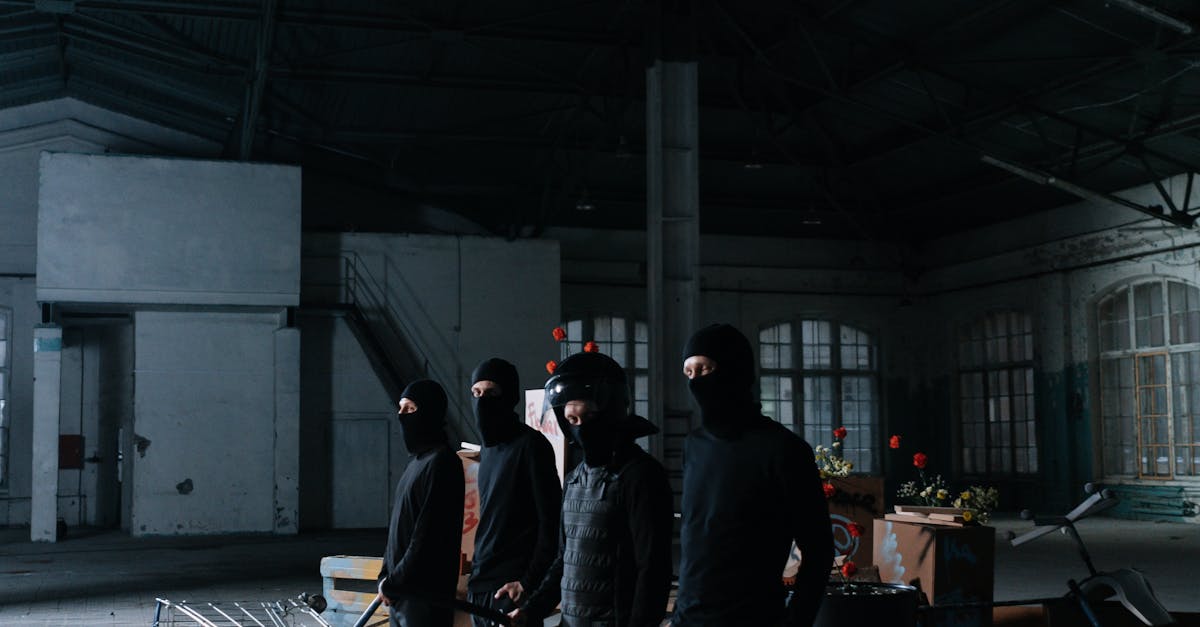
1. The Isabella Stewart Gardner Museum Heist (1990, Boston)On March 18, 1990, two men posing as police officers entered the Isabella Stewart Gardner Museum and carried out what remains the largest art theft in history. Over 81 minutes, they stole 13 works valued today at more than $500 million, including pieces by Rembrandt, Johannes Vermeer, and Edgar Degas. Among the most significant losses were Vermeer’s The Concert and Rembrandt’s The Storm on the Sea of Galilee, the latter his only known seascape. Despite decades of investigation and a standing $10 million reward, none of the artworks have been recovered.2. The…

Read More
Understanding the role of insurance-linked securities in modern investment strategies

Understanding the role of insurance-linked securities in modern investment strategies

Understanding Insurance-Linked SecuritiesInsurance-linked securities, often abbreviated as ILS, are financial instruments whose performance is tied to insurance risks rather than traditional market factors such as interest rates, equity earnings, or economic growth. The most widely known form is the catastrophe bond, which transfers risks from events like hurricanes, earthquakes, or floods from insurers to capital market investors. Other forms include collateralized reinsurance, industry loss warranties, and sidecars.The defining characteristic of ILS is that payouts rely chiefly on the incidence and magnitude of covered perils. Should a predetermined catastrophe fail to materialize, backers obtain regular coupon distributions alongside the repayment of…
Read More
The benefits of using light instead of electrons in computing systems

The benefits of using light instead of electrons in computing systems

The computing industry is approaching physical and economic limits that traditional electronic technologies struggle to overcome. As data volumes explode, artificial intelligence workloads intensify, and energy efficiency becomes a central concern, photonic computing and optical interconnects are moving from research labs into commercial roadmaps. Their appeal lies in a simple but powerful idea: using light instead of electrons to process and move information.The Limits of Conventional Electronic ComputingFor decades, progress in computing followed predictable scaling trends, with smaller transistors delivering higher performance and lower cost. That trajectory has slowed due to several constraints:Power density and heat: Modern chips dissipate enormous…
Read More

How FODMAPs contribute to abdominal pain and gas

What FODMAPs are and why they matterFODMAPs are short-chain carbohydrates that can be poorly absorbed in the small intestine and then fermented by bacteria in the colon. The acronym stands for fermentable oligosaccharides, disaccharides, monosaccharides and polyols. When these molecules reach the colon, they attract water and are rapidly fermented, which can cause gas, bloating, abdominal pain and altered bowel habits in susceptible people.When a low FODMAP approach helpsIrritable bowel syndrome (IBS): Robust clinical data indicates that a low FODMAP diet is particularly effective at alleviating IBS manifestations. Controlled trials alongside comprehensive meta-analyses document relief in roughly half to three-quarters…
Read More
Peru: CSR strengthening community dialogue and water projects in Andean territories

Building resilient water systems in Peru’s Andean highlands through CSR programs

Peru: CSR Strengthening Community Dialogue and Water Projects in Andean TerritoriesPeru’s Andean highlands present a paradox: rich ecosystems and cultural heritage, yet widespread vulnerability in water access and governance. Rapid glacier retreat, seasonal variability, and uneven infrastructure mean that many rural Andean communities face intermittent supply, water quality risks, and competing claims between agriculture, human consumption, and extractive industries. Corporate social responsibility, when designed and implemented responsibly, can strengthen community dialogue and deliver water infrastructure and watershed protection that are technically sound, socially legitimate, and resilient to climate change.Context: water challenges in Andean territoriesThree concurrent pressures impact water systems across…
Read More
The 10 Biggest Corporate Bankruptcies in History

How the largest corporate bankruptcies triggered regulatory reforms

Decoding Corporate BankruptcyCorporate insolvency happens when an enterprise fails to fulfill its financial commitments and requests legal safeguarding from its lenders. Within the United States, organizations usually submit petitions under Chapter 11 for corporate restructuring or Chapter 7 for asset liquidation. Across other nations, comparable legal structures permit financial reorganization or structured wind-downs. History's most massive corporate failures are gaged predominantly by overall assets upon the filing date, frequently attaining hundreds of billions of dollars. Such downfalls transformed entire sectors, destroyed equity value, and sparked regulatory overhauls throughout worldwide markets.Below are the ten biggest corporate bankruptcies in history, ranked largely…
Read More
The 12 Scientific Experiments That Changed 20th Century Physics

Experiments that led to the downfall of the ether hypothesis in physics

1. The Michelson–Morley Experiment (1887)Although performed near the close of the nineteenth century, the Michelson–Morley experiment laid the groundwork for the physics of the twentieth century. Albert A. Michelson and Edward W. Morley sought to uncover the “luminiferous ether,” the theoretical substance through which light waves were thought to propagate. Employing an interferometer sensitive enough to register variations as minute as a fraction of a light wavelength, they measured and contrasted the velocity of light along perpendicular axes while Earth journeyed through the cosmos.The anticipated displacement of interference fringes failed to materialize. This null outcome weakened the ether theory and…
Read More