Our website use cookies to improve and personalize your experience and to display advertisements(if any). Our website may also include cookies from third parties like Google Adsense, Google Analytics, Youtube. By using the website, you consent to the use of cookies. We have updated our Privacy Policy. Please click on the button to check our Privacy Policy.

Year: 2026

How powerful telescopes have transformed our view of the cosmos

How powerful telescopes have transformed our view of the cosmos

1. Hubble Space Telescope (HST)Deployed in 1990, the Hubble Space Telescope revolutionized contemporary astronomy by operating outside Earth’s atmosphere, thereby removing atmospheric interference. Featuring a 2.4-meter primary mirror alongside instruments capable of detecting visible, ultraviolet, and near-infrared radiation, Hubble has accumulated upwards of 1.5 million scientific observations.Key achievements include: Precise measurement of the universe’s expansion rate. Deep field images revealing thousands of distant galaxies. Evidence supporting the existence of supermassive black holes at galaxy centers. Hubble’s longevity and service missions made it one of the most scientifically productive instruments ever built.2. James Webb Space Telescope (JWST)Launched back in 2021, the…

Read More
What role does technology play in advancing eco-friendly product sustainability?

What role does technology play in advancing eco-friendly product sustainability?

What Innovations Are Leading in Eco-Friendly Products?The relentless pursuit of ecological sustainability has driven a wave of unprecedented innovation, placing green goods at the core of contemporary design and consumption. As global waste crises, resource depletion, and climate change demand urgent attention, companies and creators are rethinking materials, production methods, and utility to meet environmental mandates. This piece examines the pioneering advancements defining the sustainable product sector, emphasizing real-world progress while uncovering how technology, regulation, and consumer desires intersect.Biodegradable and Compostable Material InnovationsTraditional plastics, notorious for their longevity and environmental toll, have inspired a new class of biodegradable alternatives derived…
Read More
Why similar myths appear in isolated cultures across continents

Why similar myths appear in isolated cultures across continents

Introduction: Shared Stories Across Unconnected WorldsAcross continents and millennia, human societies have developed strikingly similar myths despite having no known contact with one another. From flood narratives in Mesopotamia and Mesoamerica to dragon legends in Europe and East Asia, recurring themes appear in cultures separated by oceans, deserts, and ice. Anthropologists, comparative mythologists, and cognitive scientists have long debated why such parallels exist. Are these coincidences, reflections of shared human psychology, or remnants of ancient migrations?Below are twelve myths and legends that appear in cultures with no direct historical contact, together with illustrations and insights that help clarify their astonishing…
Read More
How the 15 most expensive corporate acquisitions drove scale in global markets

How the 15 most expensive corporate acquisitions drove scale in global markets

IntroductionCorporate takeovers have transformed whole sectors, reshaped market competition, and built several of the biggest commercial empires ever seen. The costliest corporate buyouts in history highlight daring strategic moves, regulatory hurdles, and the drive for scale across expanding international markets. Detailed below is an in-depth look at the 15 largest corporate mergers ever finalized, ordered by their announced deal values and backed by relevant background, strategic motivations, and ultimate results.1. Vodafone Acquires Mannesmann (1999) – $202 BillionThe acquisition of Germany’s Mannesmann by the United Kingdom’s Vodafone remains the largest corporate takeover ever completed. Valued at approximately $202 billion during the…
Read More
Long-term social effects of nuclear disasters worldwide

Long-term social effects of nuclear disasters worldwide

Introduction: Nuclear Technology and Social RiskNuclear energy and weapons programs have shaped modern history with promises of progress and security. Yet when failures occur, their consequences extend far beyond radiation exposure. Nuclear disasters disrupt economies, fracture communities, alter public policy, and reshape global politics for generations. The following eight events reveal how technological breakdowns translate into long-term social consequences that persist decades after the initial explosions, meltdowns, or contamination.1. Hiroshima, Japan (1945)On August 6, 1945, the atomic bombing of Hiroshima resulted in approximately 140,000 fatalities by the conclusion of that year. Following the immediate devastation, long-term health consequences—such as leukemia,…
Read More
The impact of Bernard Madoff’s  billion scam on global investors

The impact of Bernard Madoff’s $65 billion scam on global investors

1. Bernard Madoff Investment Securities (2008) – Estimated $65 BillionBernard Madoff orchestrated the largest Ponzi scheme in history, defrauding investors of an estimated $65 billion in reported account values, with actual cash losses around $18 billion. Operating for decades, Madoff promised steady, above-market returns through a purported “split-strike conversion” strategy. In reality, he used new investor funds to pay earlier clients.The fraud collapsed during the 2008 financial crisis when redemption requests surged. Thousands of individuals, charities, pension funds, and institutional investors were devastated. Madoff was sentenced to 150 years in prison. The scandal reshaped regulatory oversight and exposed severe failures…
Read More
The 15 Most Important Space Missions in History

The 15 Most Important Space Missions in History

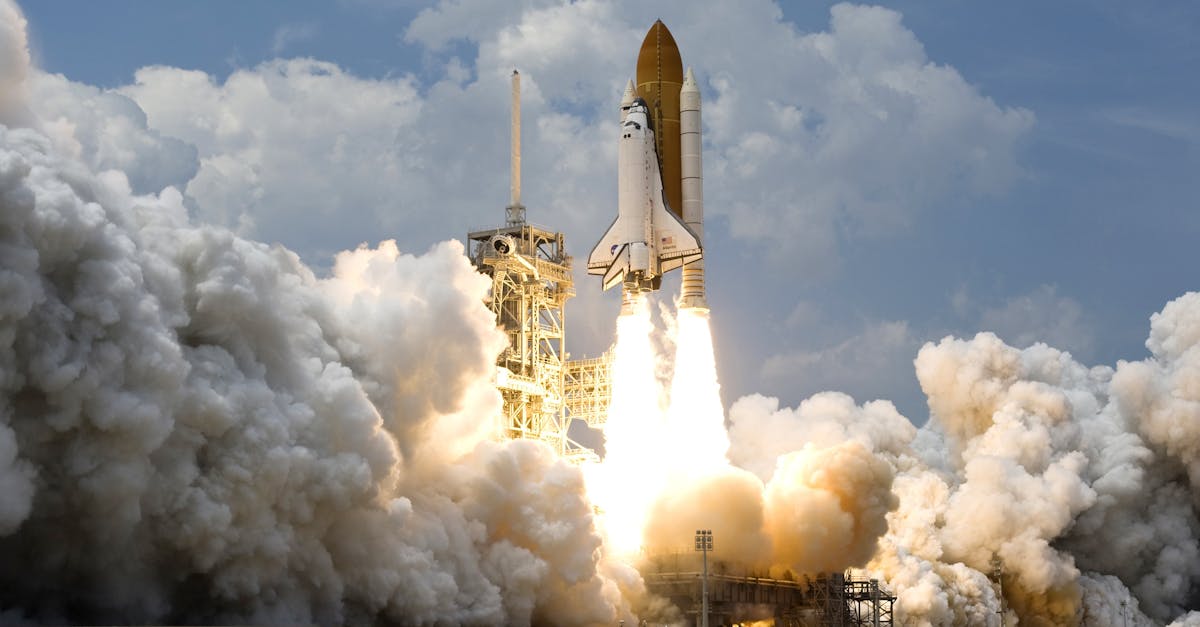
1. Sputnik 1 (1957)Sputnik 1, launched by the Soviet Union on October 4, 1957, was the first artificial satellite to orbit Earth. Weighing 83.6 kilograms, it transmitted simple radio pulses that could be detected worldwide. Its success marked the beginning of the Space Age and triggered the Cold War–era space race between the Soviet Union and the United States. Beyond its political impact, Sputnik demonstrated that rockets could place objects into orbit, laying the technological foundation for all future space missions.2. Vostok 1 (1961)On April 12, 1961, Vostok 1 carried Yuri Gagarin into orbit, making him the first human in…
Read More