Our website use cookies to improve and personalize your experience and to display advertisements(if any). Our website may also include cookies from third parties like Google Adsense, Google Analytics, Youtube. By using the website, you consent to the use of cookies. We have updated our Privacy Policy. Please click on the button to check our Privacy Policy.

Month: September 2026

The future of science through ambitious global collaborations

The future of science through ambitious global collaborations

1. The Large Hadron Collider (LHC)The Large Hadron Collider at CERN near Geneva is the world’s most powerful particle accelerator. Spanning 27 kilometers beneath the French-Swiss border, it accelerates protons to near the speed of light and collides them to recreate conditions that existed fractions of a second after the Big Bang. In 2012, experiments at the LHC confirmed the existence of the Higgs boson, a fundamental particle that explains why other particles have mass. The project involves more than 10,000 scientists and engineers from over 100 countries, making it one of the largest scientific collaborations ever assembled. Beyond particle…

Read More
How penicillin’s selective toxicity changed clinical medicine

How penicillin’s selective toxicity changed clinical medicine

1. Penicillin: The Antibiotic That Changed the Course of HistoryPenicillin, discovered by Alexander Fleming in 1928 and developed for clinical use in the 1940s, marked the beginning of the antibiotic era. Before its introduction, bacterial infections such as pneumonia, syphilis, and wound sepsis were often fatal. During World War II, mass production of penicillin reduced battlefield mortality dramatically. By targeting bacterial cell wall synthesis, it offered selective toxicity—killing bacteria without harming human cells. Its success spurred the search for dozens of other antimicrobial agents and permanently shifted medicine from supportive care to curative intervention.2. Streptomycin: The Initial Successful Remedy against…
Read More
Early communication breakthroughs that enabled the creation of the digital age

Early communication breakthroughs that enabled the creation of the digital age

1. The Telegraph and Early Digital SignalingThe conceptual roots of the internet trace back to the 19th-century telegraph. By converting language into electrical pulses transmitted over wires, the telegraph introduced the idea of encoding information into discrete signals. Samuel Morse’s system demonstrated that data could travel independently of physical transport. This abstraction—information separated from its medium—became foundational for all digital communication.2. Telephone Networks and Circuit SwitchingScalable network architecture was introduced by the worldwide telephone system. A dedicated connection could be set up between two callers for the entire duration of a call through circuit switching. Although data networks eventually transitioned…
Read More
8 currencies that governments had to replace due to hyperinflation

8 currencies that governments had to replace due to hyperinflation

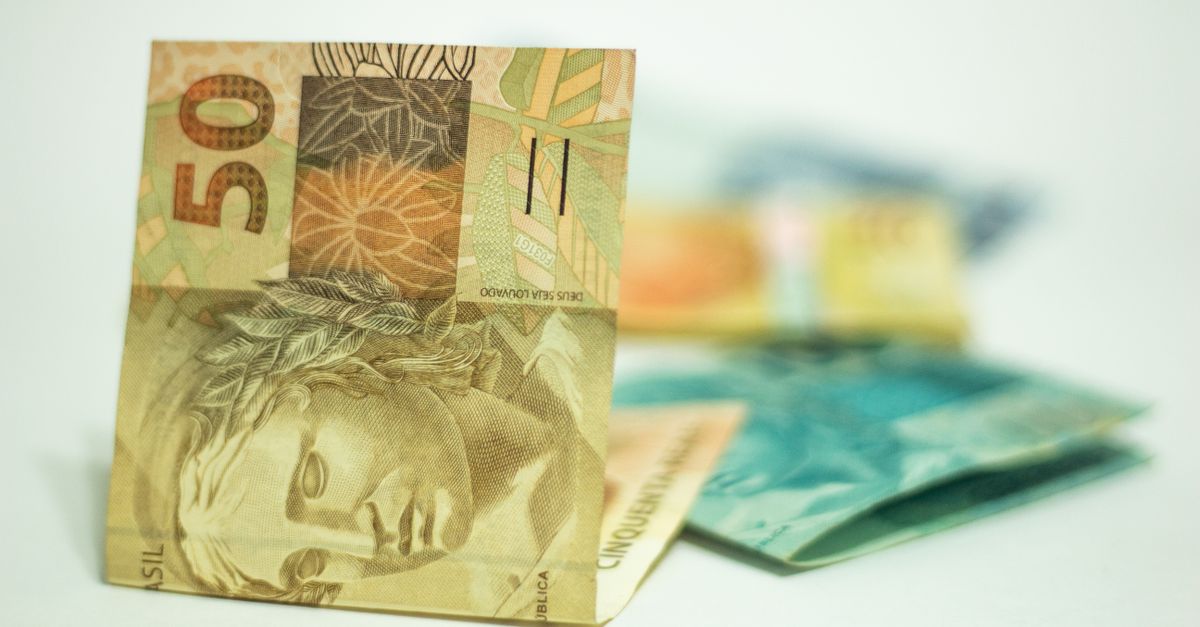
Comprehending Hyperinflation and Currency CollapseHyperinflation is an extreme and rapid increase in prices, typically exceeding 50 percent per month, that destroys a currency’s purchasing power and erodes public trust in the monetary system. It is often triggered by excessive money printing, fiscal mismanagement, political instability, war, or a collapse in productive capacity. When hyperinflation spirals out of control, national currencies can become virtually worthless, forcing governments to redenominate, replace, or abandon them altogether.Below are eight of the most dramatic examples of currencies that collapsed due to hyperinflation, illustrating how economic mismanagement and structural crises can devastate entire economies.1. Zimbabwe Dollar…
Read More
How trade routes spread goods, ideas, and finance to build the global economy

How trade routes spread goods, ideas, and finance to build the global economy

Introduction: How Trade Routes Shaped the Modern WorldGlobalization did not begin in the twentieth century. It was built over millennia by merchants, sailors, caravan leaders, and financiers who connected distant regions through vast trade networks. These routes moved not only goods, but also ideas, technologies, religions, diseases, and financial systems. The modern global economy—with its supply chains, trade agreements, and interconnected markets—rests on foundations laid by historic trade corridors.Below are ten trade routes that fundamentally shaped the global economy, transforming regional exchange into worldwide integration.1. The Silk RoadSpanning more than 4,000 miles between East Asia and the Mediterranean, the Silk…
Read More
The 10 best-selling books of all time and the secrets behind their success

The 10 best-selling books of all time and the secrets behind their success

Introduction: Measuring Literary Impact Through SalesFiguring out the top-selling books in history proves both intricate and compelling. Sales metrics frequently stretch across centuries, countless editions, and worldwide translations. Even though exact statistics differ depending on the source, historical research and publishing companies steadily pinpoint a collection of volumes that have individually moved tens or upwards of hundreds of millions of copies globally. Such literary creations cross linguistic, geographical, religious, and political divides, ultimately molding entire cultures and generations.Below is a comprehensive exploration of the 10 best-selling books of all time, based on widely cited global sales estimates and historical publishing…
Read More
The 10 largest stadiums in the world by maximum official capacity

The 10 largest stadiums in the world by maximum official capacity

Introduction: Measuring Stadium Greatness by CapacityStadium capacity remains one of the clearest indicators of a venue’s scale, ambition, and cultural significance. While modern design increasingly emphasizes comfort and premium amenities, the world’s largest stadiums still prioritize one defining feature: the ability to gather extraordinary numbers of people in a single place. These mega-venues host international football matches, national celebrations, athletics competitions, and large-scale political or cultural events. Below is a detailed look at the 10 largest stadiums in the world by seating capacity, ranked by their maximum official capacity.1. Rungrado 1st of May Stadium – 114,000Located in Pyongyang, North Korea,…
Read More