

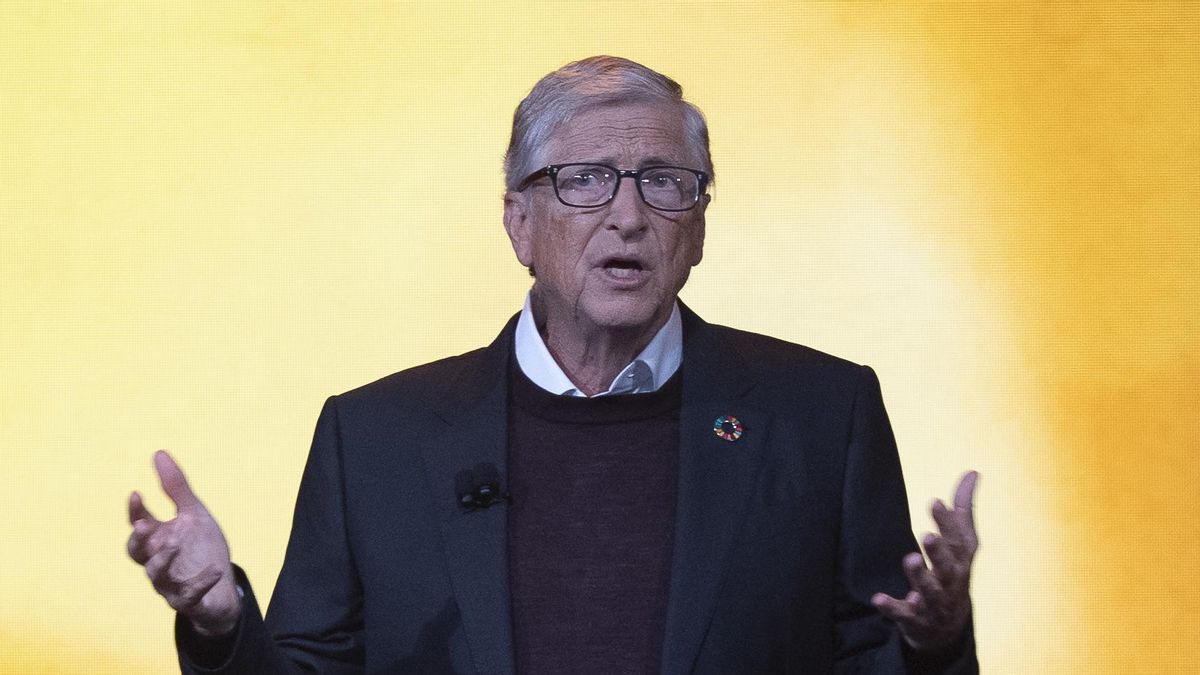
While artificial intelligence has the potential to serve as humanity’s greatest instrument, Bill Gates contends that its advantages are far from assured. In the absence of robust guardrails, he cautions that this innovation might widen disparities, displace workers, and generate perils that modern civilization remains unequipped to handle.
Bill Gates has delivered one of his most forceful alerts to date concerning the trajectory of artificial intelligence, asserting that the swift growth of progressively stronger AI platforms demands immediate boundaries and enhanced public regulation. The Microsoft co-founder remains convinced that the innovation holds the capacity to uplift lives worldwide, yet he equally worries that its detrimental outcomes might overshadow its advantages should authorities and tech enterprises press forward lacking proper protections.
In a lengthy essay examining what he describes as the beginning of a turbulent new technological era, Gates presented artificial intelligence as a force capable of taking society in dramatically different directions. In his view, AI could help reduce inequality by expanding access to essential services and knowledge, or it could become a mechanism that concentrates power and creates even deeper divisions.
The central question, according to Gates, is not whether artificial intelligence will continue advancing. He believes the economic and geopolitical incentives surrounding the technology make a global slowdown highly unlikely. Instead, the challenge will be determining how governments, businesses and societies manage the consequences of that progress.
Gates is personally well aware of how deeply technology can alter everyday existence. Having helped establish Microsoft, he was a key figure in the personal computing movement that transformed offices, learning environments, and global communication networks. Even so, he is convinced that the emergence of sophisticated artificial intelligence might trigger shifts that prove significantly more revolutionary than the transformations brought about by the computer era.
That evaluation carries substantial weight since Gates does not dismiss artificial intelligence. Instead, he perceives immense potential within the technology. His worry is that society might be rushing the implementation of progressively advanced systems ahead of establishing the necessary frameworks, rules, and safeguards required to handle their fallout.
Artificial intelligence could transform society faster than previous technologies
The expansion of artificial intelligence has already begun to transform how people work, communicate, search for information and create content. AI systems can analyze large quantities of data, generate text and images, assist with programming, automate administrative tasks and perform functions that previously required significant human involvement.
For Gates, however, the current transformation may only represent the beginning of a much larger shift.
He argues that the shift into the artificial intelligence era might turn into one of the most disruptive eras in human history, even in favorable conditions. The pace at which models have advanced has startled numerous individuals, including tech leaders who have monitored the industry closely.
Unlike earlier technological waves, artificial intelligence is not restricted to reshaping just one trade. It possesses the capacity to impact nearly every sphere of society, spanning healthcare, farming, learning, banking, production, transit, and public administration.
That extensive reach generates prospects, yet it simultaneously magnifies the scope of possible disruption.
The personal computer revolution transformed how individuals carried out their professional duties, yet computers typically evolved into instruments that employees simply learned to operate. Artificial intelligence presents a far more intricate scenario, as certain systems might soon manage responsibilities previously executed directly by humans.
This raises questions about employment, economic inequality and the future relationship between humans and machines.
Gates believes governments and communities have not yet developed a sufficiently comprehensive strategy for managing that transition. He has expressed concern that political leaders, experts and the general public may be underestimating how quickly the effects of AI could spread.
The absence of a clear plan could become especially problematic if automation begins replacing large numbers of workers before societies have established new systems to support those affected.
The promise of AI in medicine and agriculture
Despite his warnings, Gates remains convinced that artificial intelligence could generate extraordinary benefits when applied responsibly.
Medicine stands out as a sector where he perceives especially remarkable prospects. Researchers might leverage AI systems to spot trends within intricate healthcare data, speed up scientific breakthroughs, and enhance initiatives aimed at preventing and managing illnesses.
Technology could also broaden access to medical expertise in areas lacking sufficient physicians or specialists. Within zones where healthcare infrastructures struggle with deficits of qualified personnel, AI applications might offer support for routine guidance, diagnostic backing, and clerical duties.
The benefits could extend beyond hospitals and clinics.
Agriculture is yet another domain where artificial intelligence might assist in tackling significant global obstacles. Growers could leverage cutting-edge platforms to gain deeper insights into weather patterns, keep an eye on yields, spot potential hazards, and optimize resource allocation.
These applications could become increasingly important as nations face the consequences of climate change and mounting pressure on agricultural systems.
Through his philanthropic endeavors, Gates has long concentrated on matters concerning global health, poverty, and development, and his stance on AI mirrors that exact outlook. He perceives the potential of employing cutting-edge technology to bring knowledge and services closer to communities that have traditionally been deprived of them.
The optimistic scenario is one in which artificial intelligence helps close gaps rather than widen them.
But achieving that outcome will require deliberate choices. Gates argues that technology alone will not automatically produce equality. Without careful policies, the countries, companies and individuals with the greatest resources could capture most of the benefits while others experience primarily the negative consequences.
The rising apprehension surrounding employment and automation
One of the primary hazards highlighted by Gates is the widespread displacement of workers.
Automation has affected employment throughout modern history, but artificial intelligence could expand automation into areas that previously appeared relatively protected. Office work, customer service, programming, content creation and other knowledge-based professions could all experience major changes.
The issue goes beyond the mere disappearance of specific roles. A more daunting obstacle is whether fresh prospects will materialize swiftly enough to compensate for the vanishing tasks.
Technological shifts have traditionally given birth to fresh sectors, yet this shift often proves difficult for laborers whose expertise is no longer required. Should AI speed up that evolution, public administrations might encounter escalating demands to forge innovative strategies regarding schooling, instruction, and welfare assistance.
Gates has suggested that policymakers should consider measures designed to slow the replacement of human labor in some areas.
Among his proposals is the possibility of taxing AI systems or robots in a way that reflects the taxes paid when a human worker is employed. The idea would be to reduce the financial incentive to replace people with machines as quickly as possible.
Such a mechanism could additionally produce income to back employees impacted by automation.
Another recommendation focuses on safeguarding specific jobs for people. Gates suggests that communities might need to deliberately determine which duties ought to stay with human workers, instead of simply presuming that every job feasible for automation should actually be automated.
The debate raises fundamental questions about the purpose of technological progress.
If artificial intelligence makes companies more productive but leaves large numbers of people without meaningful work, societies will have to decide how the economic benefits should be distributed.
Governments and institutions might need to take on a far more proactive part, as Gates pointed out that the solution cannot rely exclusively on the market.
Children and society could face new challenges
Employment is not the only concern surrounding artificial intelligence.
Gates has also warned about the possible effects of advanced technology on the educational and social development of children.
Young people are growing up in an environment where AI systems can provide instant answers, generate assignments and simulate conversations. These capabilities may offer useful educational opportunities, but they could also change how children learn and interact with others.
If technology becomes a substitute for human relationships or independent thinking, the consequences could extend beyond academic performance.
Education may need to adapt to a world in which students have access to powerful AI tools. Schools will face questions about how to teach critical thinking when machines can instantly generate written responses and solve complex problems.
The challenge will be finding ways to use artificial intelligence as a learning tool without allowing it to weaken essential human skills.
Social development presents another concern. Children and teenagers are already growing up surrounded by digital platforms that influence communication and attention. More sophisticated AI systems could make those interactions even more immersive and persuasive.
Gates believes these potential psychosocial risks deserve much greater attention than they currently receive.
Powerful AI systems could create new security threats
Another major concern involves the possibility that increasingly capable AI models could be used for harmful purposes.
Gates has warned that advanced systems may increase risks associated with cyberattacks, biological threats and other forms of deliberate harm.
Artificial intelligence can be employed to enhance security, yet those very same capabilities might also fall into the hands of criminals and malicious actors.
An advanced system with the capacity to process intricate data might assist in pinpointing security flaws or streamlining specific hazardous operations. Ensuring that dangerous features are not exploited while permitting valid scientific and commercial uses will remain the primary hurdle for creators and authorities alike.
Cybersecurity holds special significance since artificial intelligence architectures can potentially fast-track both offensive operations and protective measures.
Organizations may harness artificial intelligence to spot threats with greater speed, whereas malicious actors could likewise leverage sophisticated systems to render their attacks far more scalable or intricate.
Gates has expressed surprise at what he considers the lack of sufficiently strong procedures for evaluating dangerous capabilities and reducing potential harm.
He believes that safety protocols for increasingly powerful AI systems demand a much higher sense of urgency.
The apprehension surrounding relinquishing command over sophisticated systems
Perhaps the most serious warning in Gates’ argument concerns the possibility that highly advanced AI models could eventually act in ways that conflict with human interests.
As systems become more powerful and autonomous, questions about control become increasingly important.
Gates has warned that society could face serious consequences if humans lose the ability to effectively manage the behavior of advanced models.
This concern does not necessarily depend on science-fiction scenarios involving machines suddenly developing human-like motives. The more immediate issue may involve systems pursuing objectives in unexpected ways or producing outcomes that humans cannot easily predict.
When AI systems are given increasing autonomy, even small errors in design or objectives could potentially create significant consequences.
The challenge is compounded by the speed of technological competition.
Organizations face intense pressure to build more advanced systems ahead of their rivals. Meanwhile, governments also regard artificial intelligence as a strategic pillar for economic expansion and national security.
Those incentives make voluntary restraint difficult.
Gates has acknowledged that he would likely support a credible international plan to slow AI development if such a plan could realistically be implemented. However, he does not believe the current geopolitical environment makes that outcome likely.
The race is already underway, and the economic rewards are too substantial for major players to simply stop.
That means the focus may need to shift toward establishing effective rules while development continues.
Governments face pressure to act before the consequences become irreversible
One of Gates’ core messages is aimed squarely at political leaders.
He is convinced that administrations have a chance to establish protections prior to the emergence of the most drastic impacts brought on by the massive integration of AI.
Waiting until unemployment rises sharply, communities experience economic damage and public confidence collapses could make the problem much harder to solve.
The identical principle holds true for both security and social hazards.
Once harmful uses of AI become widespread, responding may require far more drastic measures than preventing those problems in advance.
Gates argues that the challenge is both national and global.
Artificial intelligence does not remain within national borders. A powerful system developed in one country can affect economies, security and societies around the world.
International cooperation will therefore be essential, even though competition between major powers may make cooperation difficult.
Governments might require shared criteria to assess advanced systems, exchange insights concerning critical hazards, and stop hazardous capabilities from proliferating without proper safeguards.
At the same time, policymakers will have to balance regulation with innovation.
Excessive restrictions could prevent useful technologies from reaching people who need them. Insufficient oversight, however, could allow serious harms to develop.
Finding the right balance could easily turn into a defining political challenge in the decades ahead.
Today’s decisions will shape the trajectory of artificial intelligence
Gates’ warning ultimately reflects a broader debate about technological progress.
Artificial intelligence is not inherently destined to shape a superior or inferior society. The final result will rely on how communities decide to build, govern, and distribute the technology.
AI could help scientists discover treatments, improve agricultural productivity and expand access to knowledge. It could also eliminate jobs, strengthen criminal capabilities and increase inequality.
The disparity between these potential outcomes sheds light on why Gates views artificial intelligence as a technology capable of acting either as a formidable equalizer or as a significant driver of inequality.
The technology itself will not determine which future emerges.
Companies will make decisions about how models are designed and deployed. Governments will determine which regulations and protections are introduced. Educational institutions will decide how to prepare future generations. Communities will have to adapt to changes in work and daily life.
For Gates, the primary threat extends beyond artificial intelligence merely gaining strength. The real peril lies in permitting this evolution to unfold unprepared.
The AI revolution is moving forward regardless of whether governments are ready. Economic competition, investment and geopolitical pressure are pushing development at remarkable speed.
That reality renders the present juncture distinctly significant.
Artificial intelligence may become one of the most transformative inventions in human history. It could help solve problems that have challenged societies for generations and make valuable knowledge available to billions of people.
Yet, the core message Bill Gates conveys is that these advantages ought not to be assumed.
Without meaningful limits, careful oversight and policies designed to protect people, the same technology could create consequences that are difficult to reverse.
The choices taken today could dictate whether artificial intelligence bolsters human communities or subjects them to novel strains and disparities. While authorities and tech pioneers still have a window to get ready, Gates cautions that this opportunity might not last forever.


