Our website use cookies to improve and personalize your experience and to display advertisements(if any). Our website may also include cookies from third parties like Google Adsense, Google Analytics, Youtube. By using the website, you consent to the use of cookies. We have updated our Privacy Policy. Please click on the button to check our Privacy Policy.

Science and Technology

The history and legacy of Fortran since its creation in 1957

The history and legacy of Fortran since its creation in 1957

1. Fortran (1957)Fortran, created by IBM under the leadership of John Backus, was the first widely adopted high-level programming language. Designed for scientific and engineering calculations, it transformed programming from manual machine instructions to readable mathematical formulas. Early benchmarks showed programs written in Fortran could run nearly as efficiently as hand-written assembly, which persuaded industries to adopt it rapidly.For decades, Fortran dominated scientific computing, weather modeling, nuclear simulations, and aerospace engineering. Even today, critical systems in physics and climate science rely on modern Fortran standards. Its introduction of the compiler as a practical tool and its emphasis on numerical performance…
Read More
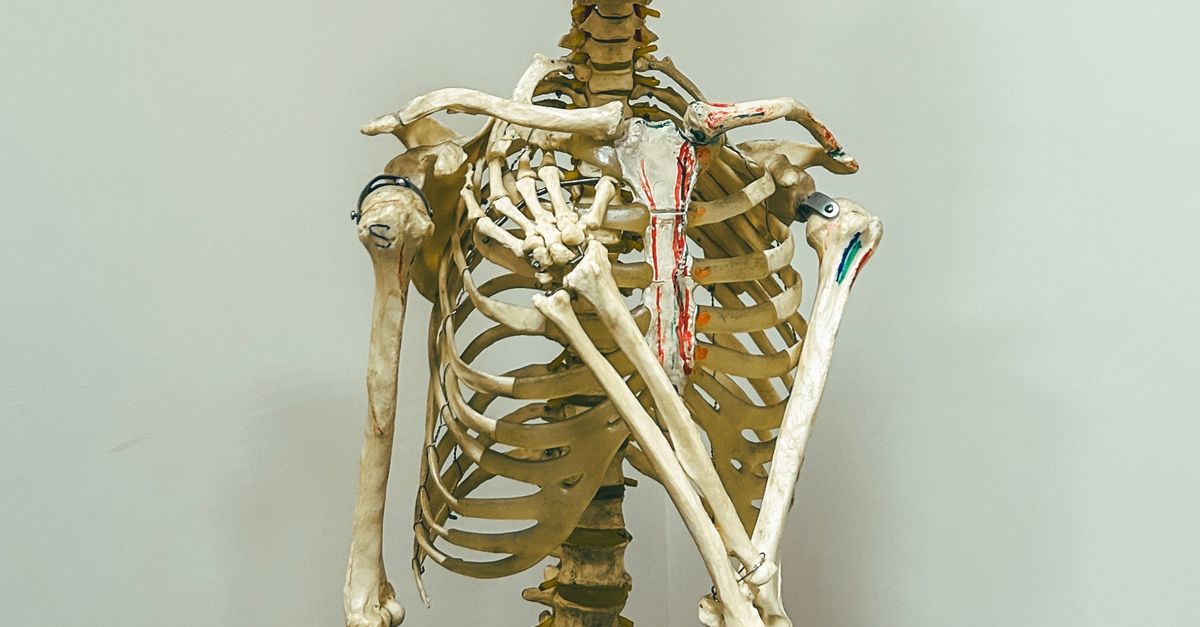
The 10 human bones and organs with functions not fully agreed upon

The 10 human bones and organs with functions not fully agreed upon

Introduction: Why Some Body Parts Still Puzzle ScienceModern anatomy has charted the human frame with extraordinary precision, although certain structures still lack a universally accepted purpose. Previously, various bones and organs were deemed "vestigial" and dismissed as evolutionary baggage. Nevertheless, continuous investigations within immunology, biomechanics, microbiology, and evolutionary biology persistently question those early hypotheses. Listed below are ten human bones and organs whose exact functions are still contested, only partially comprehended, or recently reevaluated.1. The AppendixOnce considered a useless remnant of herbivorous ancestors, the appendix has undergone a scientific reputation shift.Immune Function: It houses lymphoid tissue, pointing to a potential…
Read More
Exploring the groundbreaking innovations behind ENIAC and its legacy

Exploring the groundbreaking innovations behind ENIAC and its legacy

1. ENIAC (1945)The Electronic Numerical Integrator and Computer (ENIAC) is broadly acknowledged as the inaugural large-scale, general-purpose electronic digital computer. Conceived at the University of Pennsylvania, ENIAC covered roughly 1,800 square feet and relied on nearly 18,000 vacuum tubes. Originally, it was engineered to compute artillery firing tables for the United States Army during World War II.ENIAC demonstrated that electronic components could dramatically outperform mechanical systems. It performed thousands of calculations per second, a revolutionary speed at the time. Though programming required manual rewiring and setting switches, ENIAC proved that fully electronic computing was viable and scalable, laying the foundation…
Read More
Managing antibiotic-associated diarrhea and protecting your microbiome

Managing antibiotic-associated diarrhea and protecting your microbiome

How antibiotics affect your microbiomeAntibiotics save lives by killing or inhibiting bacteria, but they are rarely selective only for pathogens. They reduce gut microbial diversity, shift relative abundances, and can expand antibiotic-resistance genes. Common consequences include antibiotic-associated diarrhea (AAD), overgrowth of opportunistic pathogens such as Clostridioides difficile, altered immune signaling, and metabolic changes. The magnitude of disruption depends on the antibiotic class, dose, duration, and the individual’s baseline microbiome and health status.How long recovery takesRecovery timelines vary:Short programs (1–7 days) frequently yield quantifiable shifts within days, whereas diversity and numerous taxa generally start recovering in weeks.Numerous investigations document partial bounce-back…
Read More
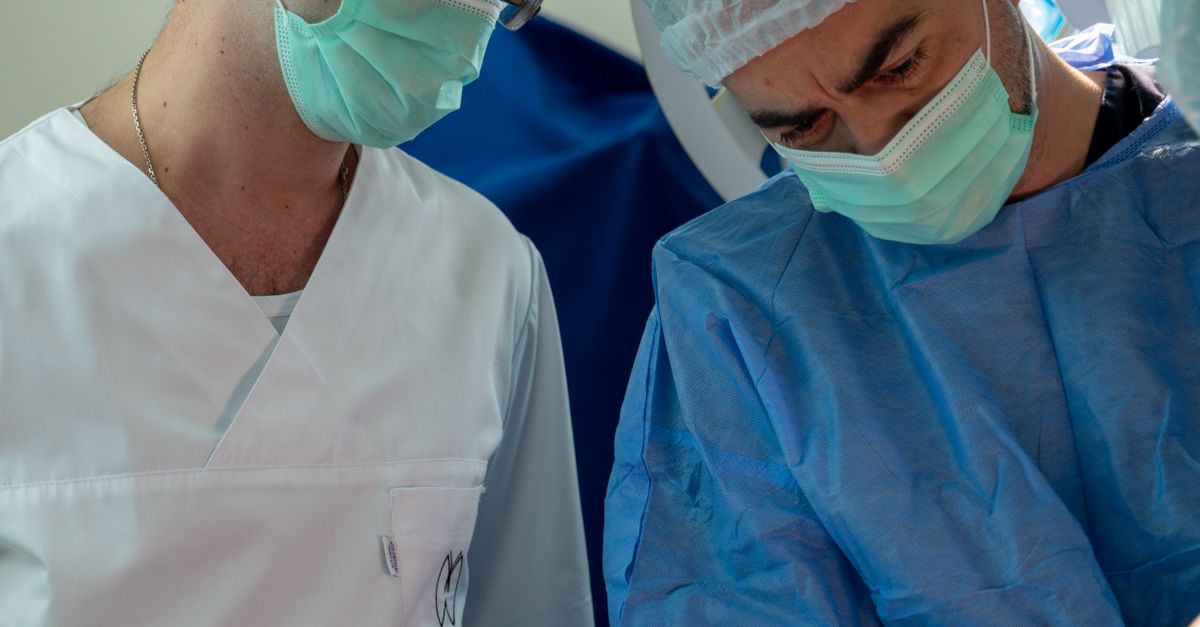
The groundbreaking surgery that introduced ether anesthesia to medicine

The groundbreaking surgery that introduced ether anesthesia to medicine

1. The First Successful Use of Ether Anesthesia (1846)Before the mid-nineteenth century, surgery functioned as a brutal, last-resort intervention executed at lightning speed to minimize agony. On October 16, 1846, at Massachusetts General Hospital, dentist William T. G. Morton publicly demonstrated the application of ether anesthesia during the extraction of a neck tumor. The patient reportedly experienced no pain.This single operation transformed medicine. Surgeons could now operate deliberately rather than desperately. Mortality rates dropped as procedures became more precise, and entirely new specialties—such as abdominal and thoracic surgery—emerged. Modern anesthesiology, patient monitoring systems, and critical care medicine trace their origins…
Read More
How powerful telescopes have transformed our view of the cosmos

How powerful telescopes have transformed our view of the cosmos

1. Hubble Space Telescope (HST)Deployed in 1990, the Hubble Space Telescope revolutionized contemporary astronomy by operating outside Earth’s atmosphere, thereby removing atmospheric interference. Featuring a 2.4-meter primary mirror alongside instruments capable of detecting visible, ultraviolet, and near-infrared radiation, Hubble has accumulated upwards of 1.5 million scientific observations.Key achievements include: Precise measurement of the universe’s expansion rate. Deep field images revealing thousands of distant galaxies. Evidence supporting the existence of supermassive black holes at galaxy centers. Hubble’s longevity and service missions made it one of the most scientifically productive instruments ever built.2. James Webb Space Telescope (JWST)Launched back in 2021, the…
Read More
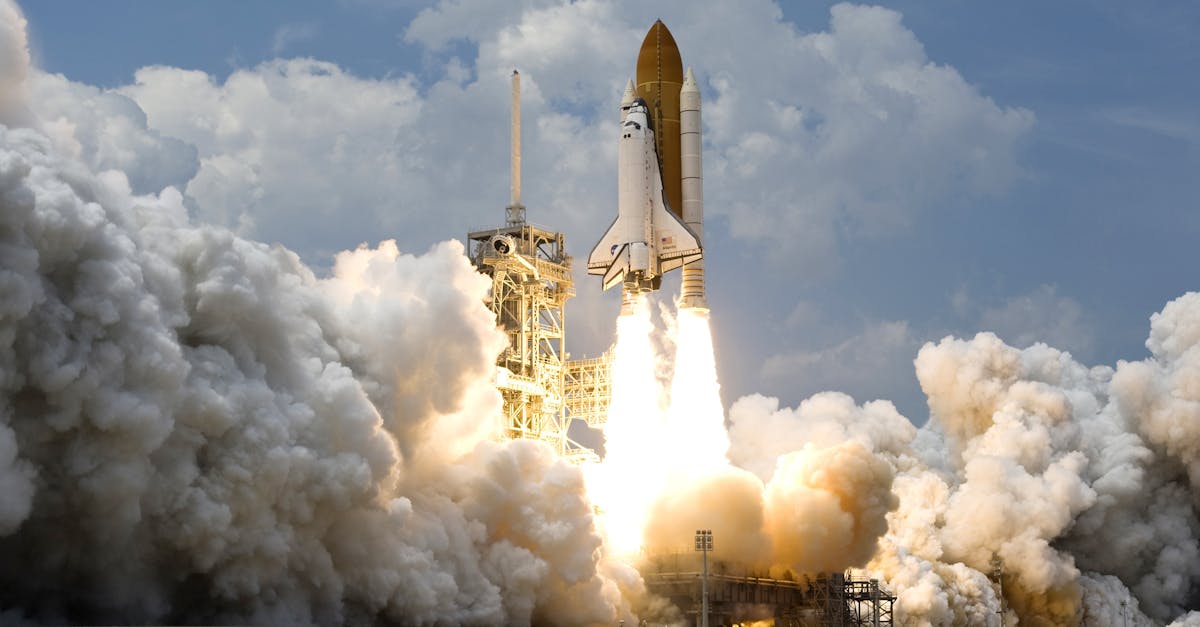
The 15 Most Important Space Missions in History

The 15 Most Important Space Missions in History

1. Sputnik 1 (1957)Sputnik 1, launched by the Soviet Union on October 4, 1957, was the first artificial satellite to orbit Earth. Weighing 83.6 kilograms, it transmitted simple radio pulses that could be detected worldwide. Its success marked the beginning of the Space Age and triggered the Cold War–era space race between the Soviet Union and the United States. Beyond its political impact, Sputnik demonstrated that rockets could place objects into orbit, laying the technological foundation for all future space missions.2. Vostok 1 (1961)On April 12, 1961, Vostok 1 carried Yuri Gagarin into orbit, making him the first human in…
Read More